
The Short Answer
Yes. Almost every vented fireplace insert needs a liner running the full height of the chimney, from the insert's collar to the top. For wood and pellet inserts that is one stainless steel liner. For gas inserts it is usually two flexible aluminum liners, one for fresh air in and one for exhaust out. The liner is not an optional extra. It is part of what makes an insert safe and makes it work the way the maker intended.
Here is why, what it involves, and how it affects the price for owners in La Canada Flintridge and the surrounding foothill towns.
Why the Old Flue Is Not Enough
Most masonry chimneys in our area were built with clay tile flue liners, or in the oldest houses, with no liner at all. Those flues were sized for an open fireplace, which sends a large volume of air and smoke up the chimney. An insert sends much less, and at a lower temperature, because it burns in a sealed box and keeps more heat in the room. Put that smaller, cooler exhaust into a big old flue and it slows down, cools further and condenses. With wood, that means heavy creosote. With gas, it means moisture that eats at mortar and tiles.
A liner sized to the insert's outlet keeps exhaust moving fast and warm all the way up. It also gives a smooth, continuous path, free of the cracked tiles and open joints common in chimneys that have been through earthquakes. Many older flues around La Canada Flintridge, Pasadena and Altadena have exactly that kind of damage, and a liner bypasses it.
There is also the rule side. Insert makers list their units for installation with a full-length liner of a stated size. Installing without one can void the listing and the warranty. NFPA 211 also calls for the flue to suit the appliance connected to it.
Why We Scan First
Before ordering a liner, we run a camera through the existing flue. Dropping an insert into an old flue is a fuel change in NFPA 211 terms, so a Level 2 look is due. The scan shows the flue's actual inside size along its whole height, any offsets or bends, and any spots where tiles have shifted or fallen in. Those details decide the liner diameter, whether it needs to be shaped oval to pass a tight spot, and whether any tile must be broken out to get it through. Our Level 2 scan is $390.
Types of Liner
- - Flexible stainless liner: the most common choice for wood and pellet inserts. It bends to follow offsets and comes in a range of diameters.
- Rigid stainless liner: used on straight flues where it can drop in without bending. It is smoother inside and slightly easier to sweep.
- Flexible aluminum liners: used in pairs for direct-vent gas inserts, rated for gas exhaust temperatures.
- Insulated liners: stainless liners wrapped in an insulating blanket, used where clearances to framing are tight or where the maker calls for it. Insulation also keeps the flue warmer and draft stronger.
How Installation Goes
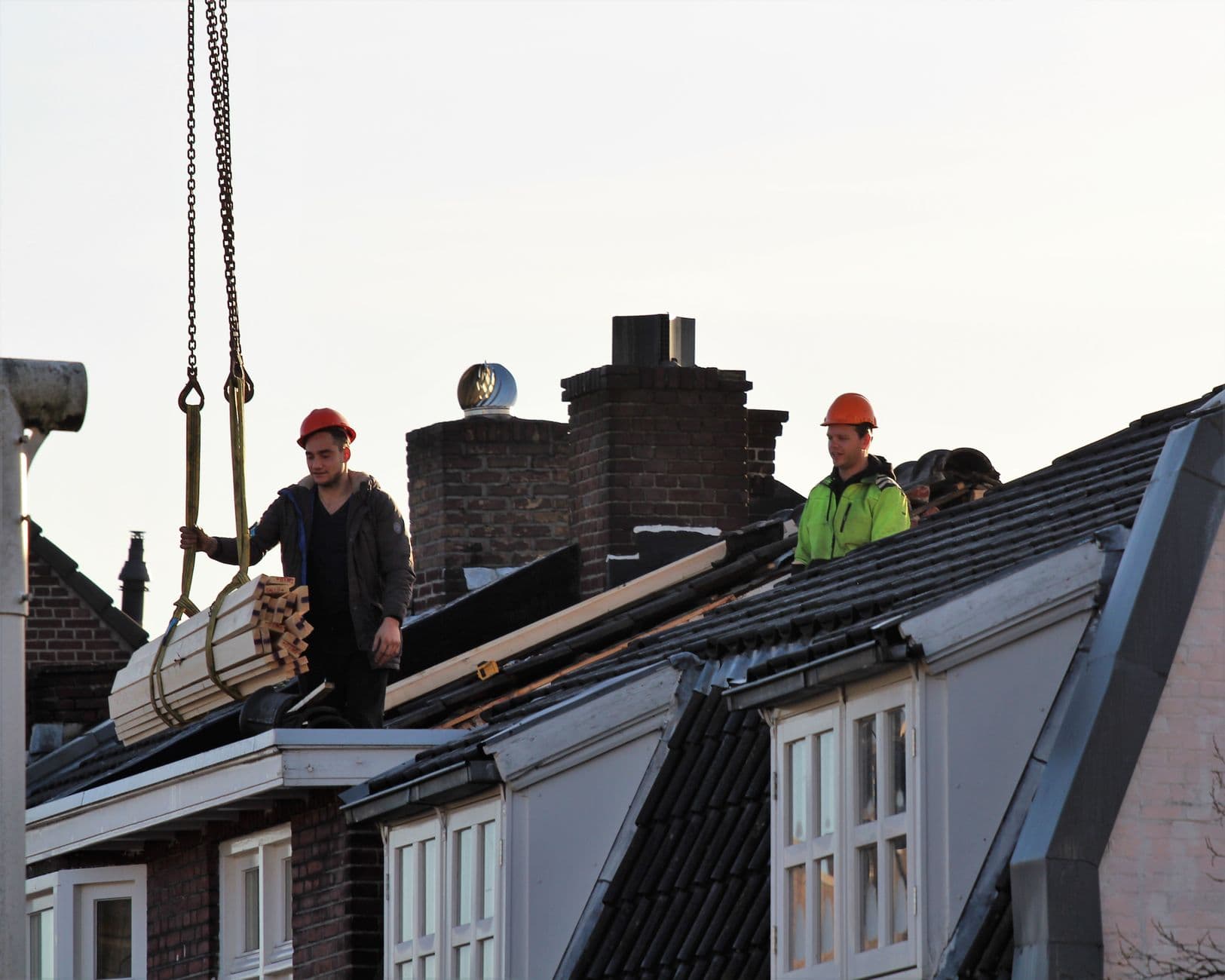
The crew works from the roof and the hearth at once. The old damper is removed or locked open. The liner is fed down from the top, connected to the insert's outlet at the bottom, and secured at the top with a plate that seals the old flue around it. A cap goes on top. The insert then slides into the firebox and the trim panel covers the gap around it. Most of this is done in a day.
What the Liner Adds to the Cost
For a gas insert, the liners are included in our installed range of $2,800 to $5,600 for an existing masonry fireplace. Taller chimneys need more liner and push the figure up. For wood and pellet inserts, the liner is priced as part of the written quote, with its length, diameter and any insulation listed. Repairs the scan turns up, such as a cracked crown or loose brick above the roof, are listed separately.
Get a Liner Estimate With Photos
The liner's cost depends mostly on chimney height and flue condition. To start, send the quote form with three photos: the chimney from the street so we can judge its height, the fireplace opening with a tape measure across it, and the top of the chimney if you can see it safely from the ground or a window. We will send back a written range for the insert and liner together, then book the scan to confirm.
Do Electric Inserts Need One?
No. Electric inserts make no combustion gases, so they need no liner and no venting. They plug into an outlet. That makes them a good choice for a fireplace whose chimney cannot be lined, or for a room that only needs a little warmth. They do not give the heat of a gas or wood unit, though, and the flame is a light effect.
Looking After the Liner
A stainless liner on a wood insert needs sweeping at least once a year, more if you burn a lot. Gas liners need a yearly check for nests, loose joints and corrosion at the top. Both should be looked at after any strong earthquake. A well-installed liner lasts many years and keeps the chimney itself out of the line of fire.
If you are weighing an insert and want to know what the liner would involve on your house, use the call link to reach Vaughn Chimney Care and mention whether the house is one story or two. That alone gives a useful first idea.
Ready to See What Fits Your Opening?
Vaughn Chimney Care works from Kinneloa Mesa on inserts, gas log sets and pellet stoves. Call with the width and height of the opening, and we bring the tape, the camera and the option sheet.